
Why School Bell Systems Still Matter in 2026
It is tempting to think bell systems are obsolete — just set a phone alarm and move on. But any school administrator who has lived through a schedule change knows the problem: 400 students do not all check their phones at the same time, and a fire drill does not wait for a notification.
A school bell system is not just about ringing a bell. It is about synchronized time, automated scheduling, zone-based paging, and emergency alerting — all running on infrastructure that does not depend on a cellular carrier or a working Wi-Fi connection. New Hampshire schools from Keene to Conway still rely on bell and PA systems to manage daily operations, and the ones that work well are the ones that were planned, not improvised.
Arcomm Communications has installed and serviced commercial paging and bell systems across New Hampshire since 1985. Here is what school administrators and facilities managers should know before upgrading or replacing a school bell or PA system.
What a Modern School Bell System Includes
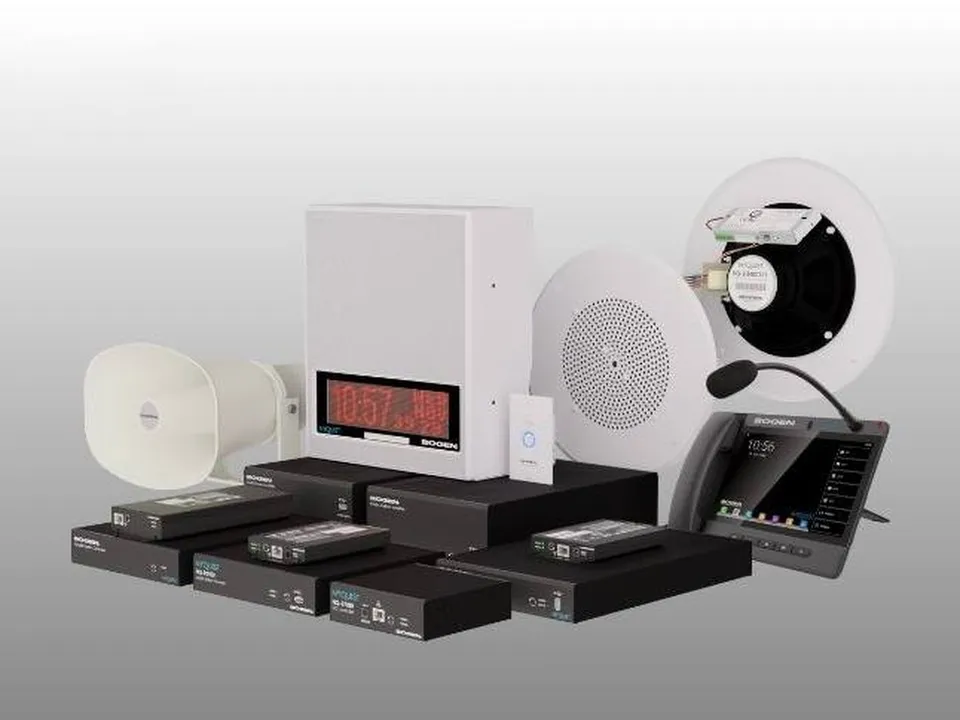
A bell system is not a single device on a wall. It is a combination of scheduling software, amplifiers, speakers, and network infrastructure working together.
Scheduling software manages the bell schedule. Modern IP-based systems let administrators program multiple schedules — normal days, half days, exam days, delayed openings — and switch between them from a web interface. Changes do not require a technician on site. Traditional systems required physical timer adjustments or proprietary software that only one person knew how to use.
Zone-based paging divides a school building into separate audio zones. The gymnasium, cafeteria, main office, and individual hallways can be paged independently or together. This matters for daily operations — calling a student to the office without interrupting every classroom — and for emergencies, where specific zones may need different instructions.
Speakers and amplifiers deliver the audio. Classroom speakers are typically ceiling-mounted 70-volt speakers that provide even coverage at conversational volume. Hallway and gymnasium speakers are higher-output horns designed to cut through ambient noise. The amplifier drives the entire system and must be sized correctly for the number of speakers and cable distance involved.
Emergency alert integration is the capability that separates a modern school PA system from an old intercom. When integrated with a school’s security infrastructure, the PA system can broadcast pre-recorded emergency messages, trigger lockdown alerts, and synchronize with fire alarm systems for code-compliant evacuation announcements.
IP-Based vs Legacy Bell Systems: When to Upgrade
Many New Hampshire schools still operate bell systems installed 15 to 25 years ago. These legacy systems — often Bogen or Rauland-Borg intercoms — still function, but they have limitations that create problems.
Scheduling inflexibility. Legacy systems typically support one schedule with manual overrides. Changing the schedule for a half day, assembly, or exam period requires someone to physically access the control panel and adjust timers. IP-based systems store unlimited schedules and can be switched remotely.
No remote access. If a principal needs to make an announcement from off-site or a facilities director needs to check system status over the weekend, a legacy system cannot do it. IP-based systems are accessible from any authorized device on the network.
Zone limitations. Older intercom systems often treat the entire building as one zone or offer limited zone control. IP-based paging supports granular zone definitions — page just the science wing, just the gym, or just the bus pickup area.
Integration gaps. Legacy bell systems cannot integrate with modern access control, security cameras, or emergency notification platforms. IP-based systems can tie into a school’s broader security infrastructure, triggering automatic announcements when a lockdown is initiated or displaying emergency instructions on digital signage.
The case for upgrading is strongest when a school is already planning network infrastructure work, renovating a wing, or replacing an end-of-life intercom system. If the legacy system still works and there are no upcoming infrastructure projects, a targeted upgrade — replacing just the scheduling controller while keeping existing speakers and wiring — may be more cost-effective.
NH-Specific Considerations for School PA Systems
Power and weather resilience. New Hampshire winters bring ice storms and power outages. A school bell system that runs entirely on network-powered IP speakers will stop working if the network goes down. We design systems with backup power for the amplifier and scheduling controller so that bell schedules and emergency paging continue during short-term outages. For schools with generator backup, the PA system should be on the generator circuit.
Fire code compliance. The NH Division of Fire Safety requires that school PA systems used for emergency announcements meet specific audibility and intelligibility standards. A system that cannot be heard clearly in every classroom during a fire event is not code-compliant. We test speaker coverage during installation to verify that announcements are intelligible at every point in the building, not just audible.
Rural school districts. Many NH school districts serve multiple buildings across town — a main school building, a separate gymnasium, a bus garage, an administrative office. IP-based paging can extend across buildings using the district’s existing network fiber, eliminating the need for separate PA systems at each location. This is particularly relevant for districts where buildings are spread across a campus or connected by town-owned fiber.
What a School Bell and PA System Costs in NH
Costs vary widely based on building size, number of zones, and whether existing speakers and wiring can be reused. These are installed prices including equipment, programming, and testing.
Scheduling controller upgrade (keep existing speakers and wiring): $3,000 to $7,000. This replaces a legacy timer-based controller with an IP-based scheduling system while reusing the existing amplifier and speakers.
Single-building IP paging system (15 to 25 zones, new speakers): $15,000 to $40,000 installed. This covers a typical elementary or middle school with classroom speakers, hallway horns, gymnasium speakers, and zone-based paging.
Multi-building campus system (40+ zones, network integration): $40,000 to $100,000+. Pricing depends on the number of buildings, existing network infrastructure, and integration with security and fire alarm systems.
Ongoing service and maintenance: $500 to $2,000 annually depending on system complexity and whether a service agreement includes priority response for emergency repairs.
Planning Timeline for NH Schools
The best time to plan a bell or PA system upgrade is during the summer break or a scheduled renovation — when classrooms are empty and cable runs can be done without disrupting instruction. But planning should start months earlier.
For a system that needs to be operational by the start of the school year, the design and procurement process should begin in the spring. Waiting until August leaves no margin for equipment lead times, wiring delays, or testing. A system that is installed but untested on the first day of school is a liability, not an asset.
For schools with upcoming renovation or new construction projects, involving a low voltage contractor during the design phase ensures that speaker locations, cable paths, and equipment rooms are planned alongside electrical and network infrastructure — not retrofitted after walls are closed.
Arcomm handles school PA and bell system installations as part of our broader commercial audio visual and paging services. We work with school facilities teams, architects, and general contractors to design systems that meet NH fire codes, integrate with existing security infrastructure, and run reliably through the school year.
Contact Arcomm at (603) 464-4000 or request a consultation to discuss a school bell or PA system for your New Hampshire school or facility.
Need help with this?
Arcomm has been installing and servicing commercial security and IT systems in New Hampshire since 1985. We'll tell you honestly what fits your building and budget.
Request a Consultation