
What a Low Voltage Contractor Actually Does
A low voltage contractor handles the wiring, installation, and maintenance of systems that run on 50 volts or less — everything below the threshold of standard electrical power work. That covers a wide range of building infrastructure: security cameras, access control systems, business phone systems, structured cabling, fiber optics, intrusion alarms, intercoms, paging systems, and managed network equipment.
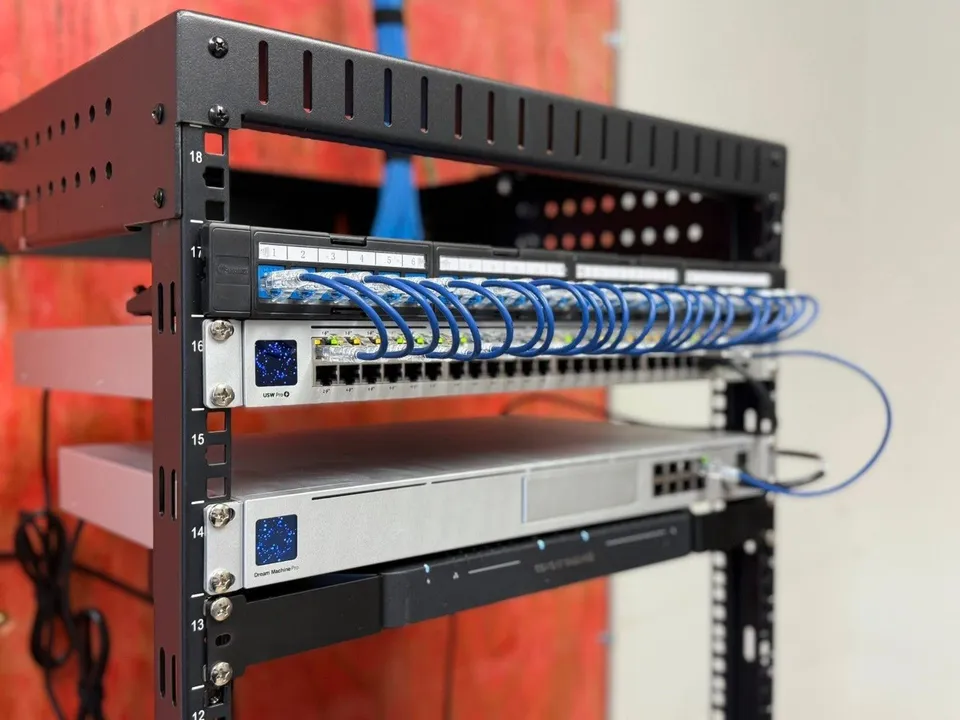
If your building has door readers, surveillance cameras, a VoIP phone system, or a network switch closet, a low voltage contractor put those in. The work involves pulling cable through walls and ceilings, terminating connections at patch panels, configuring IP-based hardware, testing signal integrity, and integrating multiple systems onto a single network.
In New Hampshire, a low voltage contractor needs to understand both the technical requirements of each system and the local permitting landscape. Cities like Manchester, Keene, and Concord have their own alarm permit requirements. The NH Electricians’ Board governs low voltage licensing, and the Division of Fire Safety oversees building code compliance for fire alarm integration. A contractor who only does one type of system — say, cameras but not cabling — often leaves gaps that another contractor has to fill later.
Low Voltage Contractor vs Electrician: What’s the Difference?
This is one of the most common questions from NH business owners planning a buildout or renovation. The distinction matters because hiring the wrong trade leads to rework, failed inspections, or systems that don’t communicate with each other.
An electrician handles high-voltage power: electrical panels, branch circuits, outlets, lighting, and service entrances. Their work is governed by the National Electrical Code (NEC) and focuses on delivering safe power to a building.
A low voltage contractor handles everything that runs on that power but at reduced voltage — the systems that use the network. Their work is governed by NEC Article 725 (Class 2 and Class 3 circuits), TIA/EIA cabling standards, and manufacturer-specific installation requirements for products like Hanwha cameras, Aiphone intercoms, or Bosch intrusion panels.
Some electricians also do low voltage work, and some low voltage contractors hold electrical licenses. But the skill sets are different. Running Cat6 cable to exact length specifications, certifying it with a Fluke tester, and making sure the cable run doesn’t exceed 295 feet (90 meters) is not the same as wiring a 20-amp receptacle. Similarly, configuring an IP camera’s subnet, setting up a VLAN for a phone system, and integrating an access control panel with a building’s active directory are IT-networking tasks that most electricians don’t perform.
For a commercial buildout in New Hampshire, you typically need both trades. The electrician runs power to the IDF closet. The low voltage contractor pulls the data cable, mounts the cameras, installs the card readers, and configures the network gear.
Why NH Businesses Benefit From a Single Low Voltage Contractor
The alternative to hiring one low voltage contractor is hiring separate vendors for each system: a cabling company, a security integrator, a phone system vendor, an IT firm. That approach creates coordination problems.
When the cabling vendor runs cable without knowing where the camera mounts are going, you get extra runs or missing drops. When the phone vendor installs a VoIP system without consulting the IT firm managing the network, you get voice quality issues because QoS settings weren’t configured. When the access control installer and the camera installer use different conduit paths, you pay for two wall penetrations instead of one.
A single low voltage contractor — one that handles all of these systems — eliminates those coordination gaps. Arcomm Communications has served New Hampshire businesses since 1985, installing and maintaining access control, security cameras, business phone systems, structured cabling, fiber optics, intrusion alarms, intercoms, paging systems, and managed IT under one roof. That means one project scope, one installation schedule, one point of accountability.
What to Look For in a New Hampshire Low Voltage Contractor
Not every company advertising low voltage services covers the full scope. When evaluating a contractor for a commercial project in NH, ask about:
Range of systems. Can they handle structured cabling, fiber optic termination, IP camera installation, access control panel programming, VoIP phone deployment, and network switch configuration? Or do they specialize in just one area? A contractor who only pulls cable won’t be able to terminate fiber, configure a Bosch intrusion panel, or set up a Ubiquiti network.
Licensing and certifications. New Hampshire requires low voltage licensing through the Electricians’ Board. For fiber optic work, FOA (Fiber Optic Association) certification demonstrates competence in splicing and OTDR testing. Manufacturer certifications — for brands like Hanwha, Axis, Aiphone, 2N, and Bosch — indicate that the contractor has been trained on specific product lines.
Experience with commercial buildings. Residential low voltage work (home theater installation, doorbell cameras) is fundamentally different from commercial work. Commercial projects involve fire code compliance, ADA requirements, multi-story cable runs, server room design, and integration with building management systems.
Post-installation support. A system that works on day one but fails six months later is a liability. Ask about service agreements, response times, and whether the contractor monitors systems remotely. Arcomm provides ongoing maintenance and support for the systems we install — not just installation and walk-away.
Common Low Voltage Projects for NH Businesses
Some of the most frequent requests we see from New Hampshire companies include:
- Office buildouts and renovations — Cat6 cabling, patch panel installation, IDF/MDF setup, and network equipment mounting
- Security system upgrades — Replacing aging analog cameras with IP-based Hanwha or Axis cameras, adding access control to exterior doors, installing Bosch intrusion detection
- Phone system migrations — Moving from legacy on-premise PBX to hosted VoIP through Arcomm Connect, including cabling and switch configuration
- Fiber optic backbone installation — Connecting buildings on a campus or running fiber between floors in a multi-story building
- Intercom and paging systems — Aiphone and 2N intercoms for building entry, Bogen-style paging for warehouses and schools
- Managed IT deployment — Ubiquiti network equipment setup, firewall configuration, and ongoing monitoring
Each of these projects involves multiple low voltage disciplines working together. A camera upgrade requires cabling, network configuration, and access control integration. A phone migration requires cabling, switch setup, and VoIP provisioning. When one contractor handles all of it, the project moves faster and the systems work together on day one.
Planning a Low Voltage Project in New Hampshire
If you’re planning a buildout, renovation, or system upgrade at a commercial property in NH, the best time to involve a low voltage contractor is during the design phase — before walls are closed and conduit is buried. Early involvement lets the contractor coordinate with the electrician, the general contractor, and the IT team to make sure cable paths, power requirements, and equipment locations are all aligned.
For businesses that already have systems in place but need service, upgrades, or expansion, a low voltage contractor can assess what’s there, identify what’s end-of-life, and recommend a path forward — whether that’s repairing an existing intercom, adding cameras to a new wing, or migrating to a modern VoIP platform.
Arcomm has been doing this work across New Hampshire since 1985. We hold the licenses, carry the manufacturer certifications, and have the field experience to handle commercial low voltage projects from cabling to cloud phones. Learn more about our structured cabling installation services or reach out to discuss your project.
Contact Arcomm at (603) 464-4000 or request a consultation.
Need help with this?
Arcomm has been installing and servicing commercial security and IT systems in New Hampshire since 1985. We'll tell you honestly what fits your building and budget.
Request a Consultation