
New Hampshire retailers do about a third of their annual business between Black Friday and New Year’s Eve, and so do burglars. Longer store hours, seasonal temp staff who do not yet know your procedures, stockrooms packed to the ceiling with high-value inventory, and a 6 PM sky that is already pitch dark by mid-December — it all adds up to a season when the cost of a weak security setup gets measured in lost holiday revenue, not just lost equipment. The time to fix that is now, in late September and October, before the holiday rush compounds every gap in your coverage.
This is the same checklist we walk through with retail clients across New Hampshire before every holiday season. Arcomm has been securing NH businesses since 1985, and the stores that come through the season clean are the ones that did these checks in the fall. If you are a retailer in Nashua, Manchester, Salem, Portsmouth, or anywhere in between, use this as a pre-season walkthrough.
Step 1: Walk your camera coverage against your actual sightlines
Most retail camera systems were designed for the floor plan you had five years ago. Before the season starts, walk the store at opening, midday, and after dark, and check coverage against where the risk actually is:
- Entrances and exits — every door customers and staff use, captured clearly enough to identify a face, not just a shape
- Point of sale — overhead coverage of each register so transactions are verifiable
- The stockroom door and the stockroom itself — this is where organized retail theft hurts you, since boosters pass stolen goods to a confederate out of camera view
- High-shelf and high-value zones — electronics, liquor, jewelry, high-end outerwear, anything easy to pocket
- Rear receiving doors — the single most common entry point for after-hours break-ins at retail plazas
Two failure modes come up constantly in New Hampshire stores: cameras aimed at skylights or windows that turn into white silhouettes when winter sun hits low-angle snow glare, and entry cameras that record usable detail at noon but nothing at 6 PM in January when it is dark and your entrance is backlit. Security camera systems for NH businesses need to be tuned for winter lighting, not summer lighting. Ask for footage pulled from your own system at closing time on a December evening — if you cannot read the image, neither can the police.
Winter also kills equipment that was marginal to begin with. Exterior housings rated for it handle -10°F fine; cheap consumer cameras fog, crack, and drop frames right when you need them. Hanwha and Axis cameras installed by a professional low-voltage contractor are specified for exactly this climate.
Step 2: Test your alarm system the way a burglar would
Your alarm system should be tested before the season — not by pressing the test button on the keypad, but by walking the system end to end:
- Open every protected door and window with the system armed to confirm each contact reports
- Walk-test every motion detector, including the stockroom the new holiday staff will prop open “just for a minute”
- Trigger the panic or holdup buttons your cashiers are supposed to use and confirm the signal actually reaches the central station
- Call your monitoring center and confirm they have your current call list — holiday season is when managers are on vacation and the after-hours call list from 2019 is the only one you have
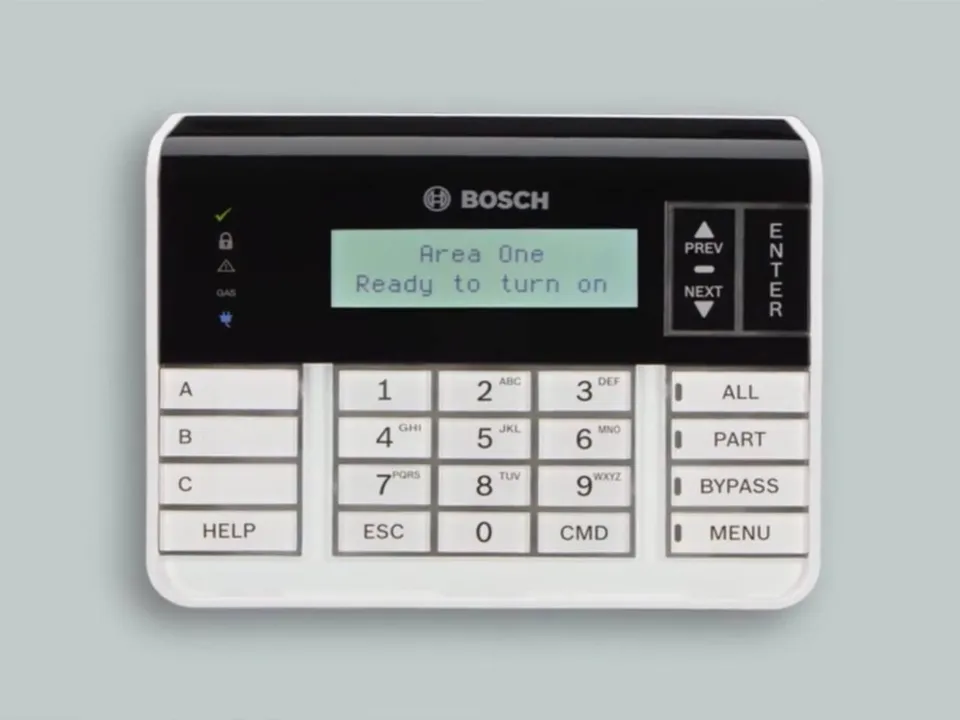
If your monitoring still runs over a phone line, upgrade to a cellular communicator before the season. A cut phone line or a copper line knocked out by a winter storm takes your alarm signal with it. Cellular communicators transmit over LTE and keep working when someone cuts your internet or the storm takes the lines down. For retail, we install Bosch intrusion panels with cellular communication and alarm.com integration — arming schedules, user codes for each seasonal employee, and push notifications when the stockroom door opens at 3 AM.
One more retail-specific gap: holiday hours. Retailers extend hours for Thanksgiving weekend and December and then forget to update the alarm schedule. The system arms while registers are still running, or worse, stays disarmed overnight because nobody reset the schedule after the extended-hours stretch. Either update the schedule in October or put user-level arm/disarm discipline in place with alarm.com notifications backing it up.
Step 3: Lock down internal access before temp staff arrive
Seasonal employees are a fact of retail life, and so is the access problem they bring: keys and codes that get shared, copied, and never revoked in January. Before the seasonal crew starts:
- Stop relying on shared keypad codes. Individual user codes mean you know exactly who opened the stockroom at 8:40 PM and who disarmed the system at 6 AM
- Consider an access control system for the stockroom and office doors, with credential sets that can be issued in November and revoked on January 2nd without rekeying anything
- Remove “hidden key” hiding spots around receiving doors — they are the first place a departing seasonal employee looks
- Review who currently has keys or codes from last season and cut the list down
This does not have to be an enterprise project for a small shop. A single-door credential system on the stockroom, installed alongside your alarm panel, is one of the highest-value low-voltage upgrades a retail store can make. Intercom and entry control at rear receiving doors pairs with it well: delivery drivers get buzzed in without staff propping doors open during the rush.
Step 4: Fix the procedural gaps that cameras cannot cover
Technology only helps if the daily routine supports it. These cost nothing and close more losses than any gadget:
- Cash overage discipline — skimming rises in December; count registers at shift change with two people
- Refund and discount audits — voided-transaction and manual-discount reports reviewed weekly during the season catch internal theft patterns early
- Closing routine — last employee out does not mean doors unlocked and stockroom open; make a printed closing checklist and make someone sign it
- Rear door discipline — during holiday receiving, back doors get propped for convenience; cameras catch it, but only if managers respond to the alert
- Lighting and landscape — burn out a bulb over a rear door before December and you have handed intruders the dark spot they were looking for
None of this is glamorous. All of it is the difference between a shrink report you can explain and one that guts your holiday margin.
Step 5: Decide what this season’s budget actually buys
If you are going to spend before the holidays — and you should — this is the priority order we recommend to NH retailers:
- Alarm cells and monitoring first — a monitored system with cellular backup that actually reaches a dispatch center is the foundation. Everything else is secondary
- Camera coverage of entries, POS, and stockroom — usable, winter-lit, verified footage beats camera count
- Stockroom access control — credential-based entry you can issue and revoke seasonally
- Rear door intercom/entry control — for stores doing serious receiving volume
Skip the temptation to buy a consumer camera kit off a shelf in November. Hardware installed in November by a DIY homeowner gets replaced in January by someone professional, and the total cost is higher than doing it right in October.
Get a pre-holiday security walkthrough scheduled
Arcomm secures NH retail, office, and municipal properties from Nashua to Berlin, with intrusion alarm, camera, and access control systems built for New Hampshire winters. We will walk your store, test what you have, and give you a straight answer about what needs fixing before Black Friday — and what can wait.
Contact Arcomm at (603) 464-4000 or request a consultation.
Need help with this?
Arcomm has been installing and servicing commercial security and IT systems in New Hampshire since 1985. We'll tell you honestly what fits your building and budget.
Request a Consultation