
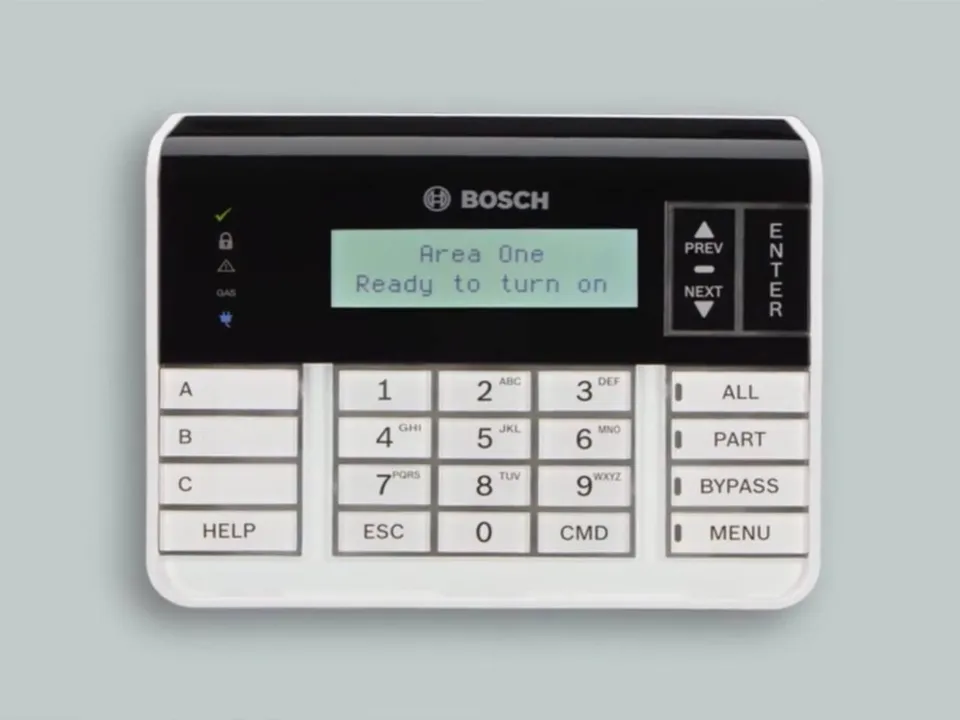
New Hampshire’s copper phone network is being retired, and one of the last things still depending on it — quietly, in thousands of buildings across the state — is the burglar alarm. Not the security panel itself, and not your internet service: the alarm’s phone-line communicator, the little transmitter inside the panel that dials out over a copper pair when an alarm trips. If you bought or inherited your alarm system years ago, an open phone line and that transmitter are all it has ever known. When Iberdrola finishes selling its New England copper network to Frontier Communications — a deal announced in July 2026, with Frontier expecting to migrate remaining copper customers to fiber within about 18 months of closing — the ground that whole method of alarm signaling sits on goes away.
Arcomm has been securing New Hampshire properties since 1985, and we have watched the signaling side of this industry change more than once. Hardwired phone lines gave way to cellular communicators, which are now the standard for new commercial systems. If your alarm still reports over copper, this is the year to plan the change — not because anyone will shut your alarm off overnight, but because waiting until the network is actually gone turns a scheduled upgrade into an emergency service call.
Why alarm panels still dial out over copper, and why that is ending
Traditional alarm signaling is exactly what it sounds like: when a door contact opens or a motion detector trips, the panel seizes the phone line and places a series of calls to the central monitoring station, sending account data over that copper pair. There is no internet involved and no recurring transmitter fee beyond your monitoring bill — which is precisely why the method survived so long. It works, it is simple, and for decades the phone company made sure a dial tone was always there.
Four things have changed:
- The copper network is being wound down. Frontier’s acquisition of Iberdrola’s New England operations, announced this July, covers roughly 800,000 dial-tone customers across seven states, including New Hampshire. Frontier has said remaining copper customers will move to its fiber network within about 18 months after the deal closes.
- The cost of keeping copper alive is climbing. Phone companies do not want to maintain an aging copper plant, and the price of an open residential or business line keeps rising to reflect that.
- Copper was never a secure signal path anyway. A burglar who knows what they are doing cuts the phone line at the network interface box outside. A hardwired alarm that cannot report is a noise-maker, not a security system.
- Cellular data is now the accepted standard. Modern alarm communicators transmit over LTE with the same reliability carriers demand for emergency and payment traffic, and they keep working when someone cuts your internet or the power drops your router.
The practical conclusion for a property owner in Manchester, Nashua, Concord, or anywhere in New Hampshire: a phone-line-dependent alarm has a limited future, and every year that goes by has less of that future in it.
How cellular alarm communicators replace the phone line
A cellular communicator is a small radio module, typically installed inside or directly beside your existing alarm panel, that transmits alarm signals over the cellular network instead of copper. The panel still does what it always did — it watches doors, windows, and motion sensors and decides when something is wrong. Only the outbound reporting path changes. In most installs, the change is invisible to anyone using the building: same keypad, same codes, same arming routine.
Two flavors exist:
- Standalone cellular communicator — a radio added to the panel that transmits directly over LTE. This is the standard replacement for a phone line and the standard primary path for new systems.
- Cellular plus internet (dual-path) — a module that reports over both broadband and cellular, with cellular as the failover. Dual-path reporting is the common recommendation for commercial sites because no single cut removes your ability to call for help.
For most New England sites, dual-path is the right long-term configuration: internet first, cellular backing it up, so a storm outage or a cut cable does not leave the central station deaf. Monitoring centers nationwide have moved to this model, and carriers are sunsetting the older 3G radios that some legacy communicators used, so even systems with a cellular radio from 2018 are worth a check.
What happens if you replace your panel — or upgrade it outright
A phone-line upgrade keeps your existing panel and swaps the reporting path, which is the inexpensive route. It makes sense when the panel itself is sound and modern enough that a monitoring company will still stand behind it.
There is a second scenario, though, and it catches a lot of property owners: the alarm panel is old enough that replacing just the communicator does not help, because the panel is the problem. Aging legacy panels, discontinued phone radios, and discontinued cellular radios all show up in commercial buildings across New Hampshire, and property managers inherit them in bulk when they take over a portfolio.
The clean route in that case is modernizing the whole intrusion side — replacing the panel, then pairing it with app-based management so the system fits the way a modern property runs. Arcomm installs Bosch intrusion panels with alarm.com integration — the same approach we apply across the intrusion alarm systems in NH we design for commercial sites — for exactly this reason: arming schedules and holiday hours handled in software, individual user codes for each manager or tenant, alerts on a phone when a door opens at 3 AM, and event reports you can pull without a phone call. Commercial property managers care about the dashboard as much as the sirens; a modern panel delivers both.
What cellular alarm conversion actually involves (and what it should cost)
The phrase “zero cost” floats around alarm marketing, so let’s be concrete about what a real conversion project looks like and where the money goes. A typical installation:
- Panel and communicator assessment — identify the panel, confirm it can accept a cellular radio or needs replacement, and check sensor count and battery health
- Communicator swap or panel replacement — the radio is mounted and wired to the panel, or the panel itself is swapped if it is end-of-life
- Signal verification with the central station — the new communicator’s first real test is a test signal confirmed end to end by the monitoring center, not just a green LED
- Cellular signal check — a communicator in the wrong corner of a steel-and-concrete basement is a communicator that drops signals; radio placement and signal strength get verified in writing
- A reprogramming walkthrough — new account data, updated call list, and a confirmation that test mode ends and live monitoring resumes
The hardware is usually the smaller part of the bill. What you are paying for is the site survey, the radio, the labor, and, most importantly, someone confirming the signal actually reached the central station — because a communicator that installs green-lit but never verified is a false sense of security with a monthly fee attached. Costs vary by panel, sensor count, and whether a panel replacement is in scope; we quote it after looking, not from a form.
A fall project list for NH property owners
Late fall is the natural window for this work in New Hampshire, for reasons that have nothing to do with alarms: heating season, longer hours of darkness, holiday closures, and the year-end budget cycle all arrive together. If a property change or a copper retirement notice prompts the question, bundle the work:
- Intrusion alarm conversion to cellular — the reporting path gets off copper before the copper is gone
- A camera check while we are on site — exterior housings graded for real New England winters, entry cameras that stay usable in low winter sun
- Door contact and sensor inventory — every protected opening tested while the system is open and being reprogrammed
- A written record of what was tested and when — for insurance documentation and your own peace of mind
If your building needs more than an alarm conversion — cameras, access control, or a network that actually supports all of it — that is exactly the scope Arcomm handles as a full-service low-voltage contractor, and bundling the work saves a second site visit later.
Get the copper off your alarm path before the network retires
Every month that passes puts more weight on the copper retirement timeline, and the last property owners to convert will be booking the scarcest installation slots. The fix is straightforward: keep the sensors and codes you already have, swap the reporting path to cellular, and confirm end to end with the central station.
Contact Arcomm at (603) 464-4000 or request a consultation.
Need help with this?
Arcomm has been installing and servicing commercial security and IT systems in New Hampshire since 1985. We'll tell you honestly what fits your building and budget.
Request a Consultation