
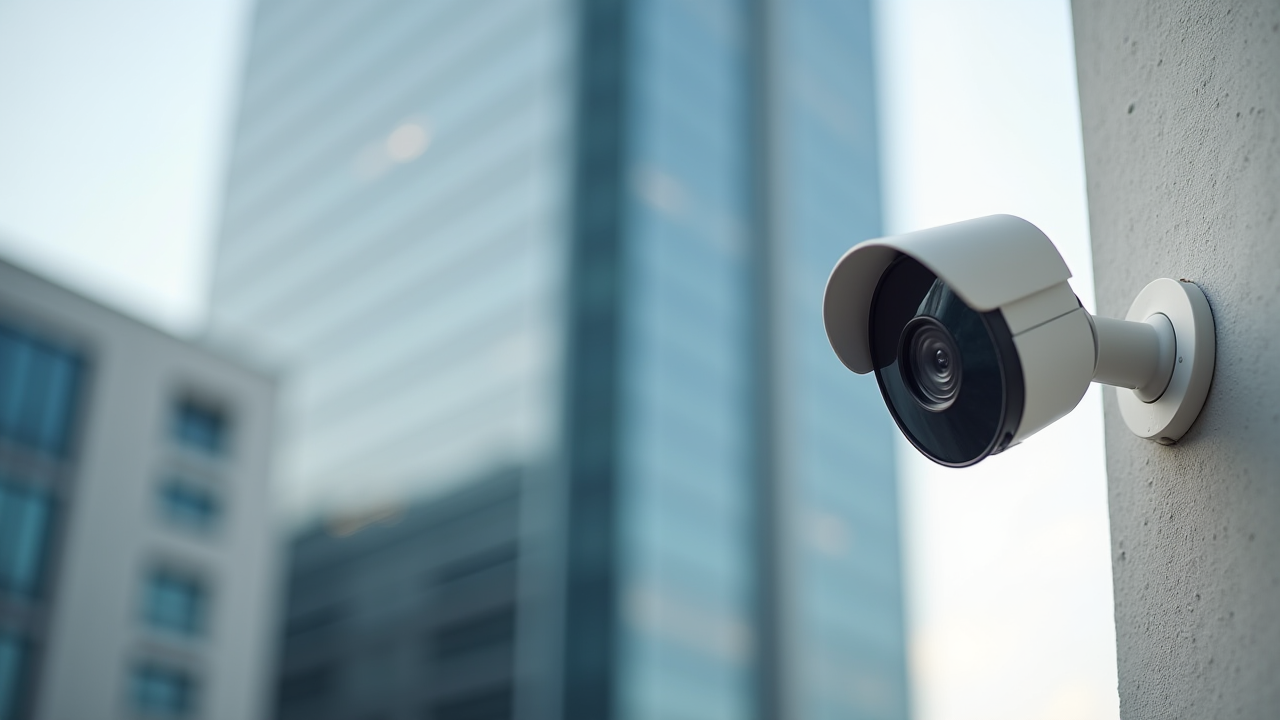
Business owners in New Hampshire do not need cameras that look impressive in a sales brochure. You need cameras that record usable footage at 5 AM in January when it is dark, cold, and someone is tampering with your loading dock in Dover. You need a system that survives New Hampshire winters without the lenses fogging or the housing cracking at -10°F.
We have installed commercial security camera systems across Manchester, Nashua, Concord, Portsmouth, Keene, Bedford, Lebanon, and Dover since 1985. Here is what matters, what does not, and what a real system costs to install.
What businesses actually need from security cameras
Most business owners start with the same question: how many cameras do I need? The better question is: what areas must be covered, and what level of detail do you need from each area?
A warehouse in Bedford needs wide-angle coverage of the loading bays to capture license plates and full-body shots of anyone approaching after hours. A medical office in Concord needs clear facial recognition at the reception desk and medication storage areas. A retail shop in Portsmouth needs coverage of cash registers, entry points, and high-theft merchandise displays.
The camera count follows from the coverage requirements, not the other way around. A proper site survey maps out blind spots, lighting conditions, and the specific incidents you are trying to prevent or document.
Features that matter versus features that do not
Resolution that matters
4K cameras are not automatically better than 4MP or 8MP cameras. What matters is the sensor quality and the lens. A Hanwha or Axis camera with a 4MP sensor and a proper varifocal lens will outperform a cheap 4K camera with a fixed lens and poor low-light performance. For most commercial applications, 4MP to 8MP per camera is sufficient.
Low-light performance
New Hampshire businesses operate in darkness more than half the year. Infrared illumination range matters, but so does the camera’s ability to handle mixed lighting. A camera pointed at a parking lot in Manchester needs to handle headlights, streetlights, and dark corners simultaneously without washing out the image. Hanwha and Axis cameras handle high dynamic range scenes well. Ubiquiti Protect systems work for smaller installations where budget is a constraint.
Weatherproofing that actually works
Not all IP67-rated housings perform the same in New Hampshire winters. Unsealed dome cameras accumulate condensation on the lens when temperatures drop below -10°F. The housing expands and contracts, breaking the seal over time. We specify cameras with proper heating elements and sealed housings for outdoor installations. Indoor cameras go indoors.
Coverage, clarity, and storage duration
Camera placement and mounting height
Mounting height determines what you can identify. Below 10 feet, cameras are vulnerable to tampering and vandalism. Above 16 feet, you capture hats and hoods, not faces. The sweet spot for most commercial installations is 10 to 14 feet. This height keeps cameras out of easy reach while maintaining facial recognition quality.
For parking lots and large outdoor areas, we mount cameras on building corners or dedicated poles at 14 to 18 feet with varifocal lenses adjusted to cover the specific zones.
Storage duration
Most businesses need 30 to 90 days of recorded footage. Insurance companies typically require a minimum of 30 days. Healthcare facilities and financial institutions may need 90 days or more for compliance. Storage capacity is calculated based on camera count, resolution, frame rate, and retention period.
Integration with access control and alarms
Security cameras become more valuable when integrated with your access control system and intrusion alarms. When a door is forced open after hours, the camera system can automatically pop up live video and begin high-frame-rate recording. When an employee badges into the server room, the system logs the access event alongside the video footage.
Milestone and Salient video management systems integrate with major access control platforms including Brivo, Keyscan, and Acre. This integration is designed into the system from the beginning so that events in one system trigger appropriate responses in the other.
Brands we install and why
We install Hanwha, Axis, Ubiquiti, Milestone, and Salient systems. These brands have proven reliability in New Hampshire conditions.
Hanwha offers commercial-grade cameras with strong low-light performance and analytics capabilities. We specify Hanwha for warehouses, manufacturing facilities, and large outdoor areas.
Axis provides excellent image quality and long-term firmware support. Axis cameras are common in healthcare facilities, schools, and municipal buildings.
Ubiquiti Protect works well for smaller businesses with budget constraints. The system is easy to manage and provides good value for retail shops and small offices.
Milestone and Salient are video management software platforms that handle multi-camera installations with advanced features like AI analytics, license plate recognition, and integration with third-party systems.
We do not install Hikvision or Dahua cameras. These brands present security vulnerabilities and supply chain concerns that we will not pass on to our clients.
What security camera systems cost in New Hampshire
These are installed prices with cable, labor, programming, and testing.
Per camera installed: $800 to $2,500 depending on mounting complexity, cable runs, and camera specifications.
Small system (4 to 6 cameras with NVR): $4,000 to $8,000. This covers most small offices, retail shops, and single-building facilities.
Medium system (12 to 20 cameras with advanced NVR): $12,000 to $22,000. This covers warehouses, multi-building campuses, and facilities requiring advanced analytics.
IP cameras with AI analytics: $1,200 to $2,500 per camera installed. Analytics include license plate recognition, loitering detection, and object classification.
Frequently asked questions
How many cameras do I need?
This depends on your facility layout and security priorities. A typical small business starts with 4 to 6 cameras covering entry points, cash handling areas, and high-value storage. We conduct a site survey to determine the right count for your specific building.
Wired or wireless cameras?
For commercial installations, wired cameras are more reliable. Wireless cameras introduce latency, potential interference, and security vulnerabilities. Battery-powered wireless cameras require regular maintenance and can fail at critical moments. We install wired PoE cameras for all commercial systems.
How long is footage stored?
Most businesses retain 30 to 90 days of footage. Storage capacity is sized during the design phase based on your retention requirements.
Can I view cameras on my phone?
Yes. All systems we install include mobile apps for iOS and Android. You can view live feeds, search recorded footage, and receive push notifications for motion events or alarms. Access is secured with multi-factor authentication.
Getting started
Security camera systems are not a commodity purchase. The quality of installation determines whether your system produces usable footage when you need it. A poorly mounted camera captures sky and pavement instead of faces. An improperly configured system overwrites footage before you can retrieve it.
Arcomm has installed commercial security camera systems across New Hampshire since 1985. We design systems that handle our winter conditions, integrate with your existing security infrastructure, and produce footage that holds up in court and insurance claims.
Contact Arcomm at (603) 464-4600 or request a consultation to discuss security cameras for your New Hampshire business.
For more details about our security camera services, visit our security camera systems NH page.
Need help with this?
Arcomm has been installing and servicing commercial security and IT systems in New Hampshire since 1985. We'll tell you honestly what fits your building and budget.
Request a Consultation